
Motors – Drivers – Synchronization
While I was deep in research on quieter stepper motor solutions I came across Vanderplas Vibraphones for the first time — and it was a genuinely exciting discovery. The builder, Dutch I believe, is a revolutionary instrument maker who had already gone down exactly the same path I was now on - stepper motors for vibrato - and he had started out using toothed belt and pulley systems for connecting the motor. He had also come up against the noise problem with steppers though and hadn't been able to solve it, so he'd made the switch to high-quality servo motors and found he could get them running quietly. He cured transmission problems of the belt system by using two servos to directly drive the two fan banks. What really caught my attention was how he used them — controlling vibrato depth independently of speed, sweeping the fans from fully open to various degrees of closure to create partial or full vibrato effects. This was a cool idea and I immediately wanted to incorporate it.
So I bought some servo motors and tried them out. I could get them to work, and the depth-control concept translated well — I added that programming to my effects library straight away, along with instant stop positions: fans snapping to fully open or fully closed on demand. But the servos I had were cheap, and they made noise of their own. More fundamentally though, I couldn't get past what they couldn't do. A servo rotates through a fixed arc and comes back — it doesn't continue. That's fine for emulating a constant rotation over 90 degrees, but it closes the door on everything I was already excited about: continuous rotation in either direction, real-time speed variation, complex step sequences, the whole world of modulation algorithms I was already sketching out in my head. Servos would have meant giving all of that up. I was already hooked on stepper motors and their possibilities, and I wasn't ready to walk away from them.
Synchronization — Gearing Up
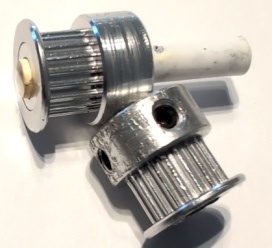
After abandoning servo motors and making a firm decision on stepper motors I still needed to solve the synchronization problem and decided to try out the original Vanderplas idea of using toothed belts and pulleys. A little research on the Internet made it quickly apparent that these were now readily available because of the emergence of 3D printing. So I purchased a long toothed belt and some toothed pulleys for my motor and fans. I installed these directly to replace my existing belt system and indeed they totally solved the synchronization problem. They also introduced a new noise though — one that had contributed to Vanderplas changing to servo motors... but I had decided on steppers so I was committed to solving this problem too.
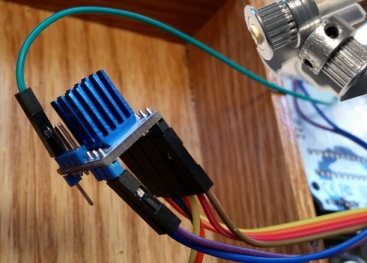
While looking at 3D printing gear online I stumbled across a stepper motor driver called the SilentStepStick TMC2100. It promised silent stepper motor operation and I was so excited I purchased some to try right away. To understand why it makes such a difference you have to understand where stepper motor noise actually comes from. The motor moves in discrete steps — each one an abrupt mechanical jump to the next position. Do that fast enough and you have a vibration. That vibration doesn't just radiate into the air as sound; it travels through physical contact into everything the motor touches — the frame, the resonators, the whole instrument. Compounding the problem is the nature of the signal driving the motor: digital voltage is a square wave, with instant hard transitions from one level to the next. That signal wrenches the motor to each new step position as abruptly as possible. The result on a vibraphone frame is an unpleasant mechanical buzz.

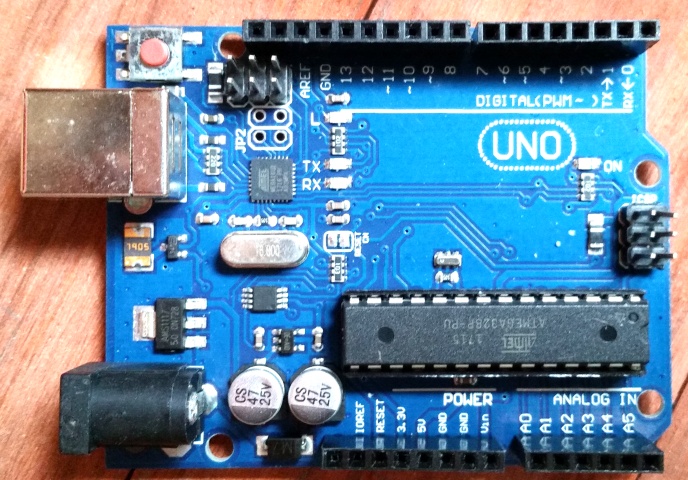
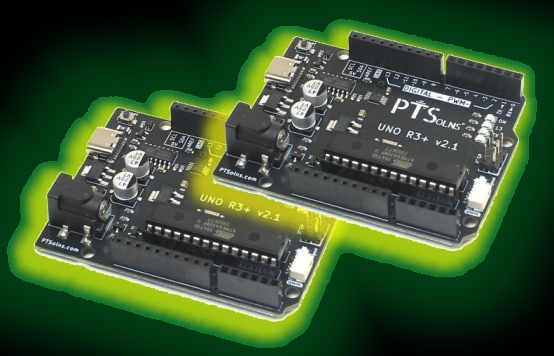
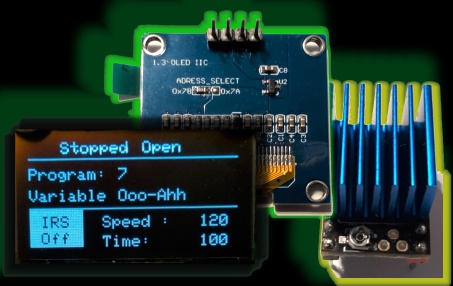
The SilentStepStick attacks this in two ways. First, microstepping: instead of one full step at a time, the driver divides each physical step into as many as 256 microsteps using subtle combinations of voltage across the coils. The motor moves far more smoothly through each increment. Second — and more importantly — is what the TMC2100 calls StealthChop. Rather than switching voltage instantly between states, StealthChop delivers something closer to a sine wave: a gradual, smooth transition that eases the motor to each new position rather than snapping it. The two technologies together make an enormous difference. When I wired one up and ran the motor through it for the first time the change was immediate and dramatic. It needed some configuration and all my Arduino code needed rewriting to send step and direction signals to the driver rather than driving the motor coils directly — but it was absolutely worth it.
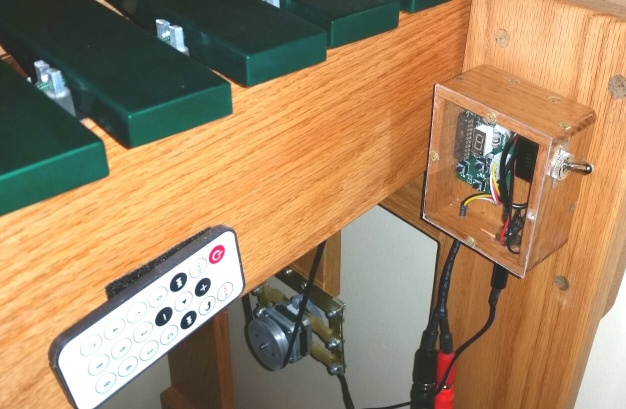
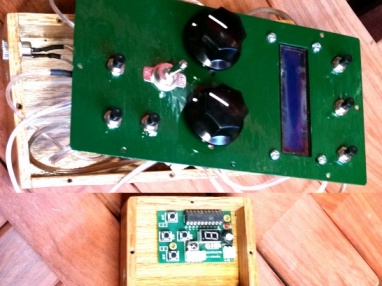
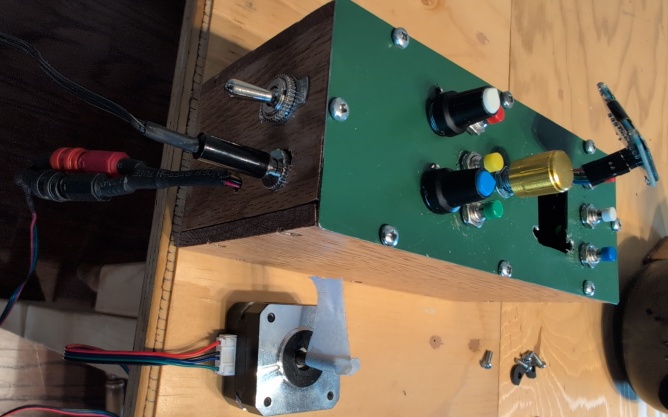
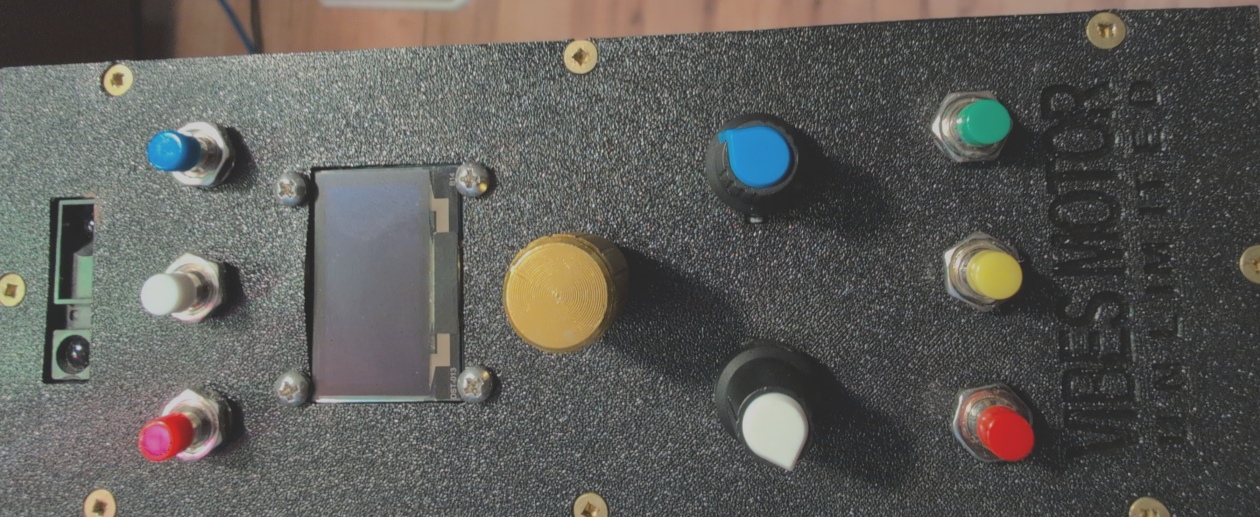
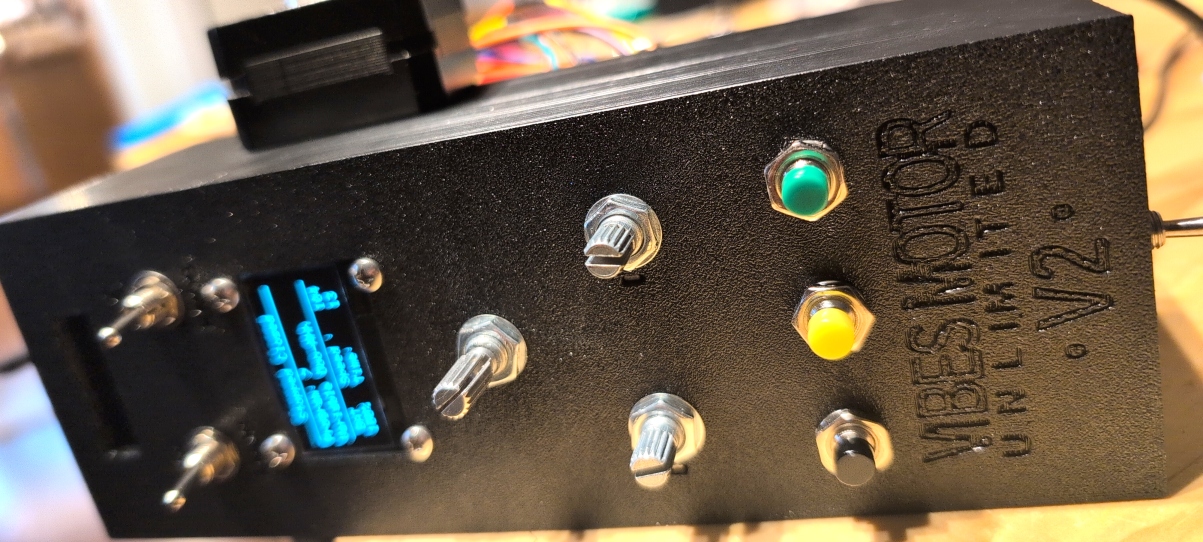
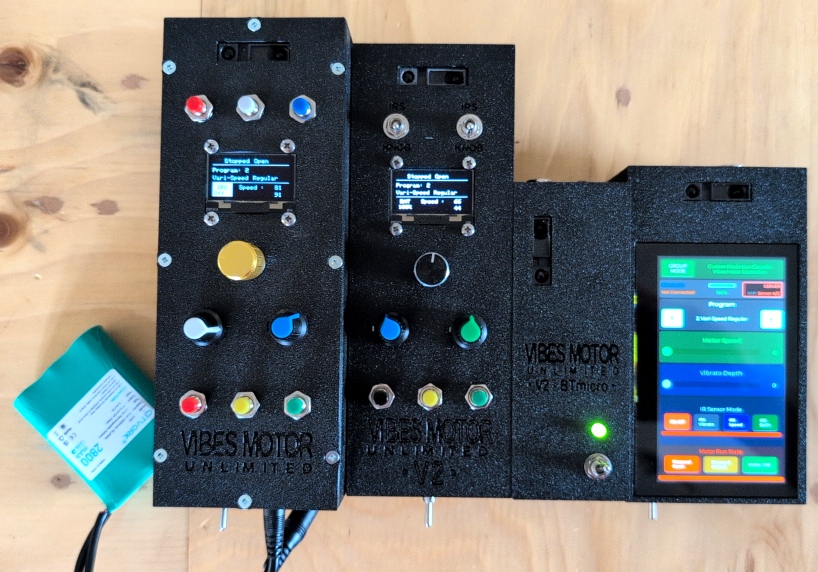
With a quiet motor and perfectly synchronized fans, and the vibrato depth control now in hand, I added a second potentiometer and more buttons to the control box. This gave the Arduino more inputs for depth as well as speed, and to control stop positions and run conditions. It also started to open up ideas about other controllable options! Things were expanding. Every new input was another dimension of control, and every new dimension of control suggested new modulation possibilities. The effects library was growing fast! I still had to figure out a solution to noise from the toothed belt system, but I had some ideas.