
Ultimate Control King!
June was supposed to be the month everything wrapped up — final plans, final downloadables, ready for sale. But some new ideas got in the way. And once again, they were too good to leave for later.
It started with a suggestion from a friend at the TSB event in May: a new vibrato program that emulated the way string and wind players naturally introduce vibrato on long notes — gradually, and after a delay. It was such a cool idea it demanded to be included. The obvious way to make it feel natural and automatic was to use the vibraphone pedal itself to determine note length. Pedal down briefly — short note, no effect. Pedal held down — long note, and after a small delay, vibrato gradually ramps in.
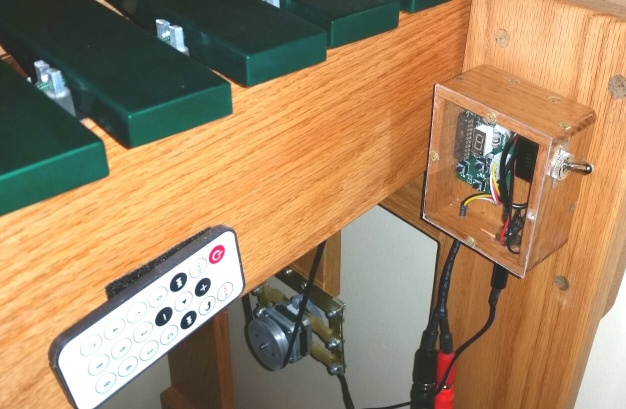
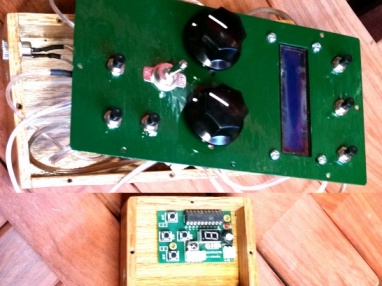
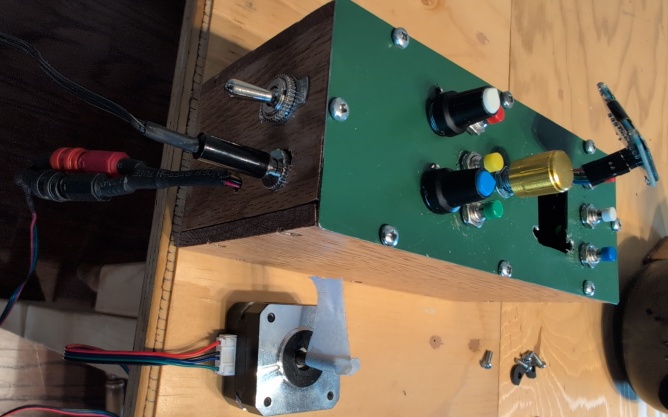
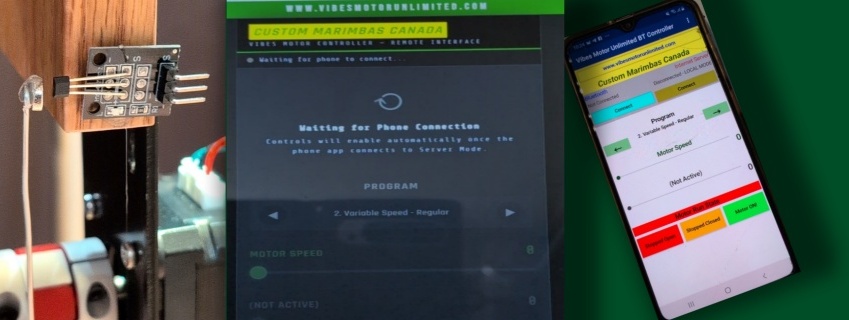
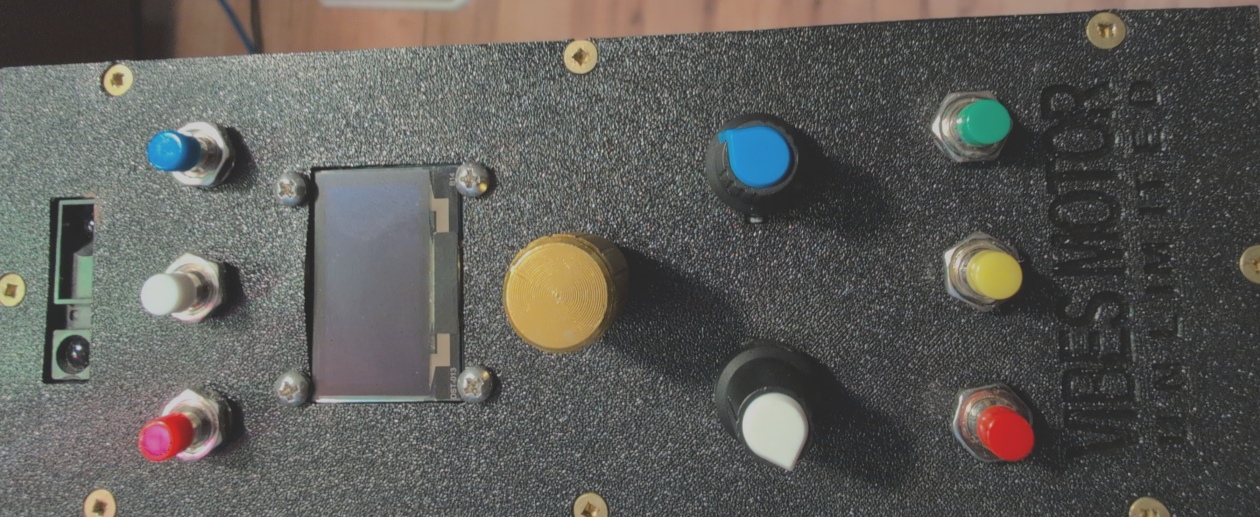
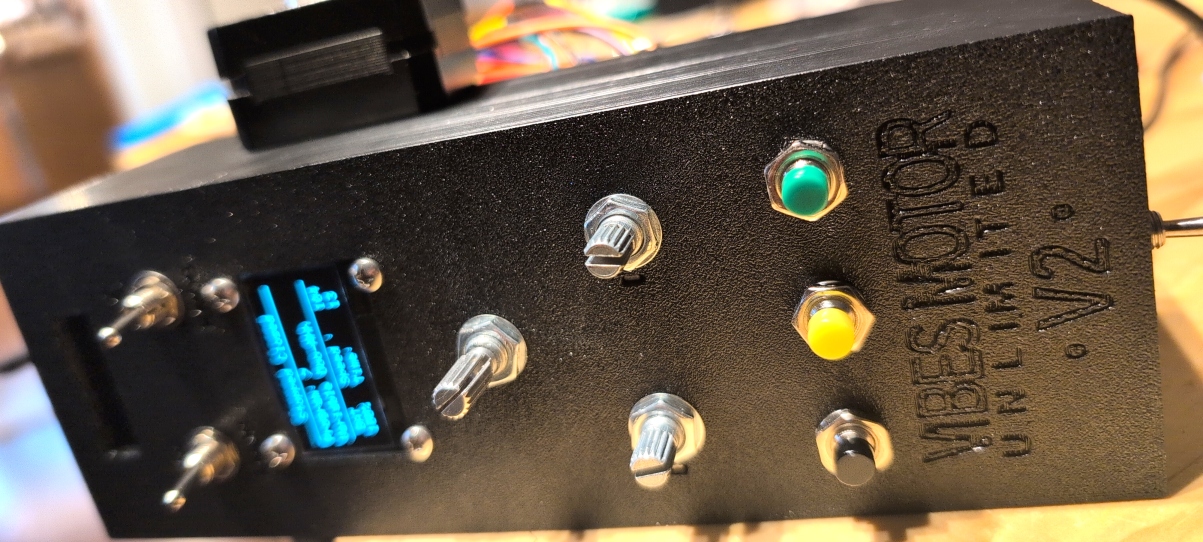
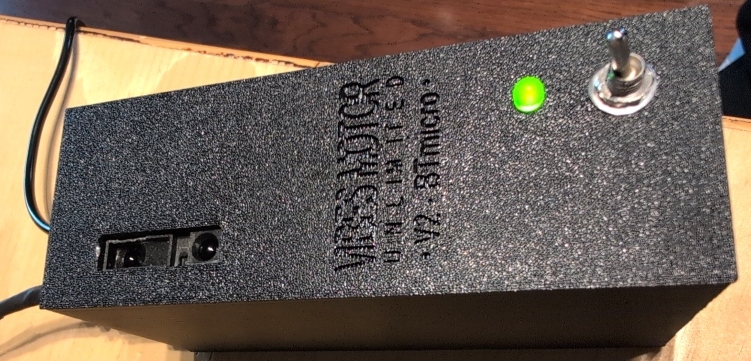
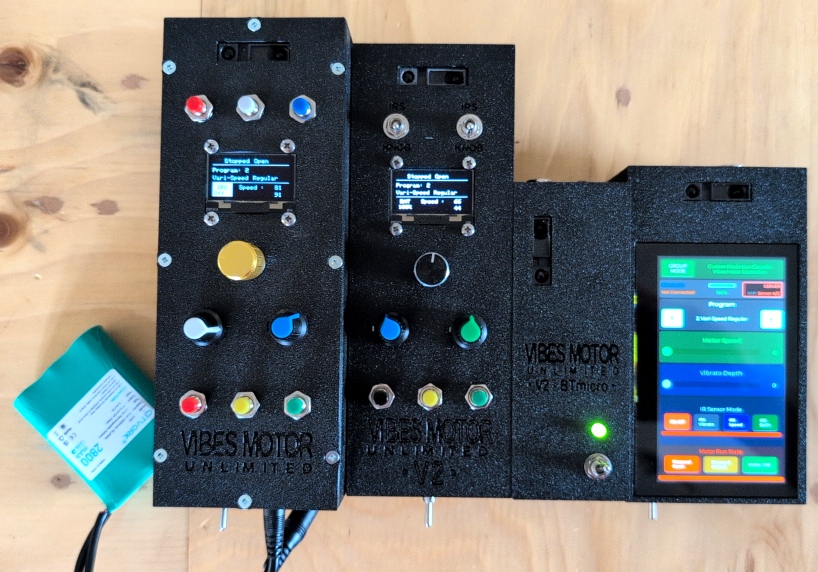
The code itself wasn't too tricky, though there were subtleties to work through. It was running on the test bench within days. But making it work in the real world required new hardware: a second Hall effect sensor, this time attached to the pedal mechanism. Every unit — V1, V2, V2 BT Micro and V3 — needed a new 1/8" three-contact socket retrofitted, allowing a standard audio cable to carry the three wires down to the pedal. More drilling, more soldering, and some experimentation to find the ideal physical mounting point on the pedal.
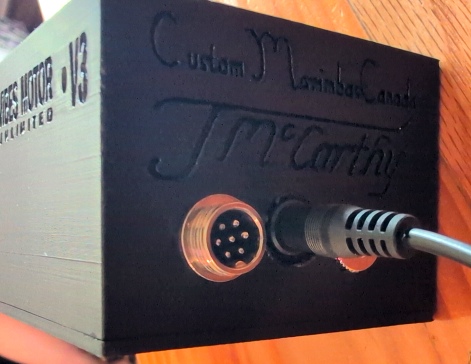
Because the jack carries 3.3V, ground, and a signal line straight to an RP2040 GPIO pin, it can be used for all kinds of things not yet even imagined — future sensors, future accessories, whatever comes next. But the Hall effect sensor for this particular pedal program needed one small addition: a resistor wired inline on the signal line, right at the sensor end. Not every future device connected to this socket will need that resistor, so it lives with the Hall effect sensor itself rather than built into the box.
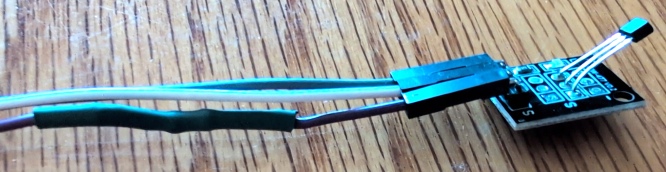
Using shielded audio cable for the run also helps keep the 3.3V signal clean over distance, resisting interference from everything else going on around a busy vibraphone control box.
A three-pin connection wired to power, ground, and a GPIO signal pin — the possibilities go far beyond just the pedal. Any Hall effect sensor, any variable resistance, any simple on/off switch could now plug into this multi-purpose programmable socket.
While waiting on that hardware, a side project began — one that quickly became too exciting to set aside. A new device had arrived: another Waveshare touchscreen, this time a 7" screen with some genuinely interesting extra capabilities. The initial thought was simple. Internet control of a group of motor controllers is cool — but what happens when there's no internet, or the venue's power drops, and you'd otherwise need a laptop and a router just to run the show?
This device could be the webpage and the server, all in one — by creating its own Wi-Fi access point that every other device could connect directly to. No internet required at all. It was named the Conductor. With AI writing much of the code, it was built to replicate the online web interface — but with a richer, more capable graphical layout.
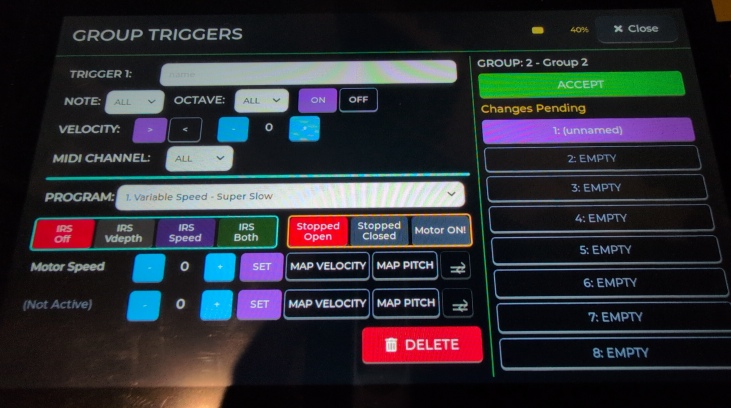
Then came the next evolution: multiple groups. The idea had been brewing since the ensemble sync feature was first added — Solo mode or Group mode, one binary choice. But why stop at one group? More code changes to both the V3 firmware and the phone app meant every user could now select which of ten possible groups they belonged to. The Conductor scaled up to match — managing up to ten independent groups simultaneously, each capable of sending and receiving changes in real time.
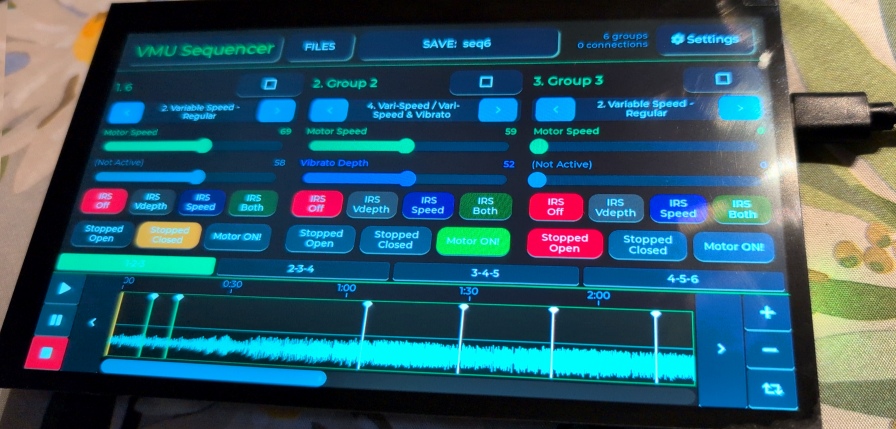
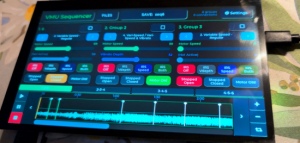
But there was still more. A whole new mode was added to the device: alongside Conductor mode sat a new Sequencer mode. Where the Conductor listens and responds to changes from any connected controller, the Sequencer is designed to rule absolutely — it accepts no incoming changes, only broadcasting pre-programmed control data continuously, with very low latency. A true sequencer for fully pre-programmed performances, and just like the Conductor, capable of managing up to ten independent groups, each with its own unique sequence of motor controls.
Full programmability followed — building sequences, saving and loading them from a proper file system, whether saving a live Conductor session or a complete pre-built Sequence. And to round it off, audio playback was added: MP3 files could now be attached to events on the timeline, triggering in perfect sync alongside the motor control changes.
By the end of a very full June, the device was almost entirely programmed, and most of the corresponding app and firmware rewrites for the individual controllers were complete. The downloadable product files were delayed once again — but for a good reason. They can now be written up to include everything the TSB event inspired.
Watch out for the actual product release soon — and, hopefully not long after, the ultra-cool Conductor/Sequencer module that serves its own internet.